Building Integrated Photovoltaics (BIPV)
Building-integrated photovoltaic (BIPV) – PV modules are considered to be building integrated, if they replace conventional building materials in such as the roof, glazing, or façades and if removed would have to be replaced by an appropriate building component.
- A well-designed BIPV solar PV system can meet a significant portion of the building’s energy demand, minimising reliance on the grid and reducing carbon footprint.
- Although integrated photovoltaic panels come with higher initial costs than conventional panels, this can be offset by replacing other building materials.
- BIPV modules must meet extra requirements than conventional PV modules.
Durability, reliability, and safety

BIPV systems are designed and built not only to produce electricity efficiently, but also to play the same role as the traditional wall, roofing, cladding or glazing materials they replace. Consequently, they must address all the normal issues of a construction product, including:
- Appearance and aesthetics;
- Weather tightness and protection from the elements including rain, snow, wind, hail;
- Long lifetime of materials and good long term performance;
- Risks and consequences of failure and all safety aspects;
- Mechanical rigidity, structural integrity and safety;
- Energy economy, such as shading, daylighting, thermal insulation;
- Fire protection;
- Sound insulation;
- Resistant to impact;
- Low electrical performance degradation.

BIPV modules

Most BIPV modules are based on glass-glass PV laminates and can be considered as panes of glass to which PV cells are applied, so familiar glazing installation methods can be used.
Additional attributes that differentiate BIPV from standard PV modules are:
- Frameless: The module strength is provided by the laminate.
- Thicker frontsheet and backsheet glasses of both 3 mm, 4 mm, or even 6 mm thickness and more, depending on the project and construction requirements
- Bi-facial
- Wider cell-free borders to avoid cell shading by the construction profiles
- Certified as a laminated safety glass and as a construction component by public construction authorities to allow the installation in building skin (e.g., overhead installation or even point fixings) Read more.
- Designs do not always prioritise module efficiency but rather aesthetic requirements (e.g., transparency, colour, thermal insulation).
- Junction box located on the edge of the module to allow an invisible wiring during installation.

Roof Integration

Roofs have the highest solar potential of buildings and are therefore not only the preferred place of installation for PV systems but also usually the most economical solution to generate solar electricity. Several BIPV systems have been developed for all kinds of roof construction types including solar tiles or mounting can be used to integrate standard PV modules as part of a roof

BIPV Shading


Photovoltaic cells and modules can be used as external photovoltaic shading systems to control light and reduce solar heat gain either as fixed elements or movable devices to adapt to dynamic solar conditions. These solutions often prefer bi-facial technologies to harvest sunlight from both sides and have wider cell separation to allow light transmission.
Garden rooms: BIPV can be incorporated into conservatories and garden room structures, providing a dual function of growing plants and generating energy.
Verandas, Pergolas and gazebos: BIPV modules can be integrated into pergolas and gazebos, offering shade and energy generation in gardens and recreational areas.
Shading elements for public spaces: Due to the ongoing climate change, more and more cities want to provide shading elements for public open spaces.
Balustrades: BIPV modules can be integrated into balustrades or guardrails, providing safety and generating solar energy simultaneously.
Parapets and Balconies: Solar modules can be incorporated into parapet walls at the edge of a roof or balcony. This application combines aesthetics with energy generation, using surfaces that normally protrude from the façade of the building


Solar Carports


A Solar Carport is a ground-mounted canopy that stretches over car parking spaces. Solar PV panels are mounted on top; while cars can park underneath, EV Charge Points can be installed for the parking spaces, and the electricity generated by the Solar Carport used to charge electric cars.
Why choose a Solar Carport?
- Lower energy costs: Electricity generated through Solar PV is usually significantly cheaper than purchasing electricity from the grid.
- Increase onsite generation: It can provide a source of power to charge electric cars, or the power can be used elsewhere on the site.
- Dual functionality: Car parks are large, open spaces that are often underused so extra value can be obtained by using it to increase energy generation capacity.
- Sustainability: Visually demonstrates commitment to sustainability for employees and site visitors, especially when combined with EV charge points
- Shade, Protection and shelter: Solar parking canopies provide shade and protection from heat from the sun, rain and snow.
- Reduced Heat Island Effect: Car park solar canopies can help mitigate the urban heat island effect by providing shade and reducing surface temperatures in parking lots.


Façades

Façades present a compelling option for PV integration, offering both advantages and disadvantages compared to roof installations. One notable drawback is that façades are more susceptible to shading, whether from surrounding buildings, self-shading, or trees. Furthermore, façades typically receive between 35% to 45% less irradiation than an optimally oriented roof would, depending on the geographic location. BIPV façades can be cost-competitive compared with conventional façade systems.

Fire Class

The fire resistance classes range from Class C (fundamental fire resistance), to Class B to Class A (highest fire resistance). A minimum fire resistance rating Class C is necessary for any building-mounted module (BAPV). Certification to a higher level may be considered in order to satisfy specific conditions and requirements. Depending on the building class, design criteria and other relevant aspects, PV modules integrated in buildings (BIPV) may require specific, more advanced characteristics as regards fire hazard than those tested by means of IEC 61730-2. As a rule, a minimum fire resistance rating Class A or Class B is needed.

Related Articles
-
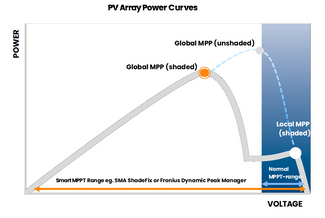
Don't put solar in the shade!
Solar photovoltaic (PV) panels convert sunlight into DC electricity –...
Read more -
-
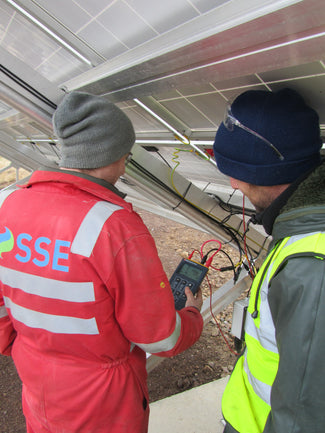
Troubleshooting Systems
Although the equipment in properly installed systems is unlikely to...
Read more -
-
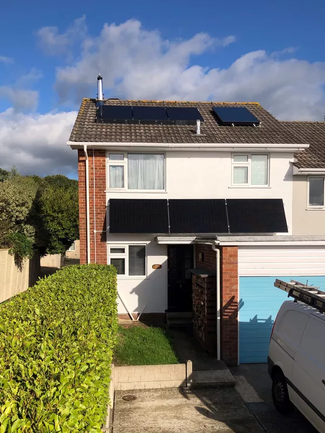
Using excess power for water heating in off-grid systems
In off-grid systems, once the battery is full, excess photovoltaic...
Read more -
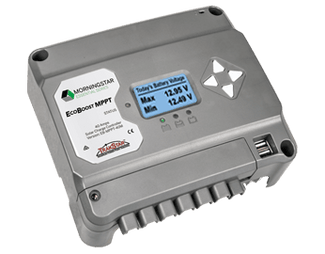
Solar Charge Controllers
Solar photovoltaic charge controllers are used in off-grid PV solar...
Read more -
Solar Grid Connect Inverters
These convert the DC power from photovoltaic (PV) modules directly...
Read more -
-
Solar Photovoltaic (PV) Panels
Photovoltaic (PV) modules, often referred to as solar panels consist of...
Read more -
-
-
-
-
-