There’s lots of talk about the risk of fire associated with PV systems.
DC cables and connectors are the most frequently identified category of components at the point of fire origin, caused by excessive resistive heating in defective solar panel connectors.
However, the problem shouldn’t exist if these are selected and installed properly.
Installation Standards say:
- Where plug and sockets are mated together in any part of the PV array circuit, they shall be of the same model and from the same manufacturer.
- Different brands may only be interconnected where a test report has been provided confirming compatibility of the two types to the requirements of BS EN 50521.
- The plug and sockets shall be rated for the voltage and current maxima calculated for the circuit.
- Plug and sockets fixed to cable ends on site shall be assembled in accordance with manufacturer’s instructions using designated crimp and assembly tools.
- Connectors must be the correct type to suit diameter of solar cable being used.
The use of an incorrect crimp or assembly tool can have a devastating effect on the effectiveness of a PV connector and can cause overheating and fire issues.
High-quality connectors, cable management, regular inspection and maintenance are vital.
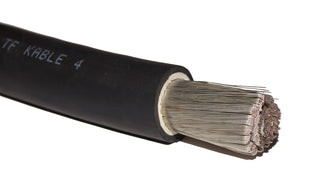
- Choose UV-resistant, flame-retardant, certified PV cables
- Only connect together using approved compatible connectors See here.
- Use correct tools on new connectors See here:
- Install according to manufacturer’s instruction: See Installation Video Here


Cable Management


Reliability and long life of the PV system must be ensured by proper cable management. Cables must be selected and installed to minimise the risk of earth faults and short-circuits. These can be caused by a wide variety of causes such as:
- Water ingress into junction boxes or connectors.
- Abrasion damage to cables.
- Insulation damage due to thermal or wind cycling of cables
- Impact or storm damage
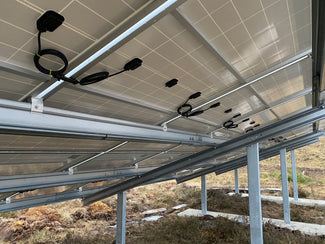
Long term protection of the wiring can be ensured by supporting cables adequately to keep them out of the wet and to avoid abrasion.
Staubli Instructions Say:
Cable routing
- Cable management must allow a minimum of 20 mm of cable that exits straight from the cable seal without bending or stress.
- Refer to cable manufacturer specification for minimum bending radius.
- In particular, the application notes according to Annex A of IEC 62930 must be observed.
Contaminated/damaged connectors:
- Do not allow connectors to be contaminated by the environment (e.g. soil, water, insects, dust). (To further prevent water damage – during installation, don’t leave exposed module connectors unconnected. )
- Do not allow the connector to be contaminated on its surface (e.g. stickers, paint, heat shrink tubing).
- Do not allow the connector to lie directly on the roofing surface.
- Do not allow the connector to be at the lowest point of cabling where water can collect.
- Do not allow the connector to lie in standing water.
- Do not allow cable ties to be mounted directly on the connector body.
Mechanical stress:
- Check that the connectors are not subjected to a permanent mechanical tensile load or vibration.
- Connectors shall not be under strain from cable management.
The products below are designed to provide solutions to these issues:


Products

Cable, Wiring and Connector Accessories
Cable management on roofs is essential to keep the cables from getting damaged by gradual wear and to...
View collection
Solar Cable and Connectors
Double insulated single core cable together with polarised weatherproof DC connectors.
View collection
Solar Cable Assembly Tools
The correct tools should be used to prepare cables and attach connectors.
View collectionRelated Articles
-

Building Integrated Solar PV
Although integrated photovoltaic panels come with higher initial costs than...
Read more -
Don't put solar in the shade!
Solar photovoltaic (PV) panels convert sunlight into DC electricity –...
Read more -
-
Troubleshooting Systems
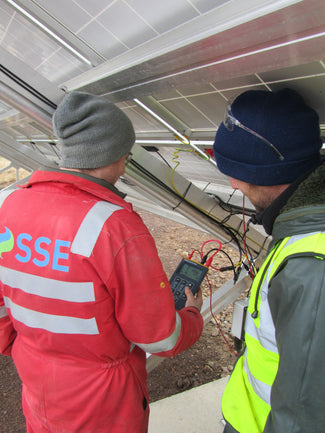
Although the equipment in properly installed systems is unlikely to...
Read more -
-
Using excess power for water heating in off-grid systems
In off-grid systems, once the battery is full, excess photovoltaic...
Read more -
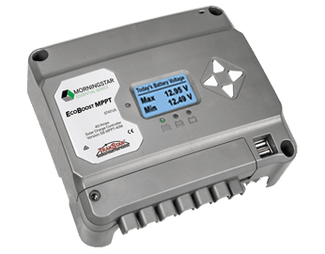
Solar Charge Controllers
Solar photovoltaic charge controllers are used in off-grid PV solar...
Read more -
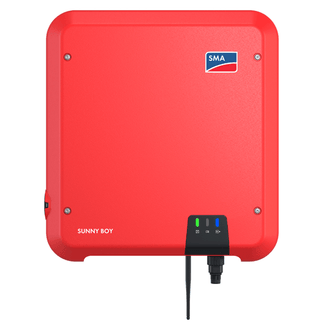
Solar Grid Connect Inverters
These convert the DC power from photovoltaic (PV) modules directly...
Read more -
-
Solar Photovoltaic (PV) Panels
Photovoltaic (PV) modules, often referred to as solar panels consist of...
Read more -
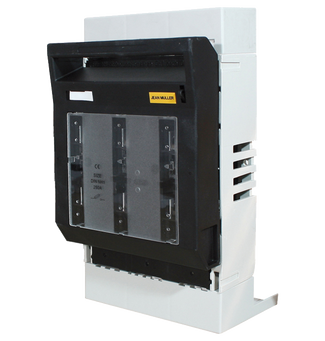
Fuses and Circuit Protection
The fitting of adequate fuses or circuit protection in all...
Read more -
-
-